THE LAW STUDENTS IN JUSTICE CONFERENCE- MAIDEN EDITION
- October 27, 2026
- 4 min read
- Centre for Justice Education and Development
The Centre for Justice Education and Development Brings 120 Participants to Abuja to Champion Grassroots Legal Advocacy.
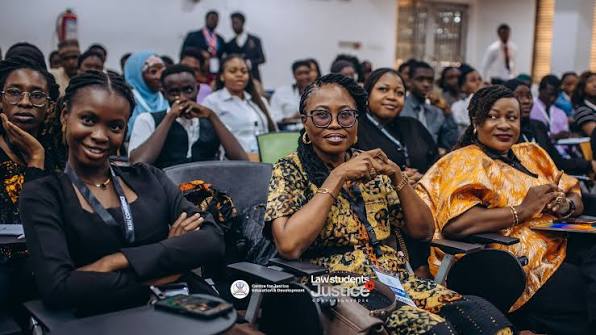
On 12 September 2026, 120 law students, lawyers, teachers and justice-sector stakeholders gathered at the Work & Connect Event Hall in Jabi, Abuja, for the Law Students in Justice Conference, organised by the Centre for Justice Education and Development (CJED). Under the theme "Grassroot Legal Advocacy: Student-led initiatives driving change in underserved communities," the one-day event gave students practical tools, real-world perspectives and a platform to turn what they learn in the classroom into action for communities that need it most.
Equipping and empowering future justice advocates The conference set out to bring law students, stakeholders and teachers from across Nigeria into one room. Its goals were to equip students with practical justice delivery methods and to empower them, through grants and essay competitions, to promote justice education in the country. The programme combined a keynote address, four expert sessions, presentations by essay finalists, a panel discussion, an award and the unveiling of a new tool from CJED, Lawticha web app. Keynote: the four Ps of student-led justice work
The keynote address was delivered by Mrs. Funke Adeoye, Esq., Executive Director of Hope Behind Bars Africa, who framed the role of law students around four ideas.
Proximity: Law in action means getting close to underserved people, both economically and legally. Power: Knowledge is power, including the ability to act at all. She urged students to use critical thinking and problem-solving skills in real-life situations, to identify the problems around them, and to test the link between those problems and the law. Law students, she said, should use the power they already have as students. Partnerships: Conferences like this one, and partnerships with organisations and diverse stakeholders, open doors that knowledge alone cannot. Persistence: Students and law clinics will meet roadblocks, and she encouraged them to give perseverance a chance when they do. Four sessions on practice, empathy, community and cost
Advocacy beyond the courtroom Deji Adeyanju, Esq., Partner at DAP and Convener of the Concerned Nigerians for the Protection of Human Rights and the Rule of Law Initiative, spoke on what it takes to build a legal career that can sustain meaningful advocacy. He noted that a practice needs a strategy for profitability in order to give reasonable advocacy. Among the ingredients he named were mentorship, a sound mind, and good contacts built on integrity, good character and a genuine care for people. He also stressed the ability to add value, integrity in handling money, a good professional appearance, a properly structured law firm, and faith.
Access to justice for the vulnerable Mrs. Chinyere Eyoh, Founder of the Sexual Offences Awareness and Response (SOAR) Initiative, led a session titled "Access to Justice for the Vulnerable: Rethinking Service Delivery and Intervention Approach." She underlined the need to recognise the signs of gender-based violence and offer solutions even when victims do not speak up, and the importance of being equipped with both knowledge and empathy before working with clients who may be in dangerous situations.
Assessing community needs Mrs. Irene Bangwell, Co-founder of KNOSK N100-a-day Secondary School in Kuje, spoke on assessing community needs as a clear path for interventions. Her message to students was to evaluate what a community actually needs before designing a justice intervention, by asking questions and carrying out surveys before starting any project.
The cost of justice Stanley Ibe, Esq., Managing Partner at GoodShare and Maxwell, addressed the financial and non-financial barriers to effective human rights advocacy. He discussed human rights and justice efforts across African countries and what legal advocacy should be about, looking at advocacy in three arenas: in court, before the commission, and within Nigeria as it relates to pre-trial detainees. The institutions covered included the African Commission on Human and Peoples' Rights, the African Court on Human and Peoples' Rights and the Police. Essay presentations and a panel on grassroots advocacy The day opened with goodwill messages and included presentations by the finalists of the essay competition, one of the conference's key tools for encouraging students to think and write about justice education. A panel discussion then explored the role of law students in grassroots advocacy, with panellists sharing insights and advice for the next generation of lawyers. The panel was moderated by Ande Jeremiah, Esq., and featured: Jemimah Oteh, Esq, Ofure B. Inedia, Esq. , Winnie E. Williams, Esq.,Maryam Gidado, Esq. and Ozioma Soludo, Esq. Recognising support for student-led initiatives CJED presented an award for Excellence of Support to Student-Led Initiatives to Mrs. Odinakaonye Lagi, recognising her support for students working to drive change in their communities. CJED extends special appreciation to all the speakers and to the sponsors and partners who made the conference a success: Administration of Criminal Justice Monitoring Committee (ACJMC) Legal Aid Council of Nigeria Legend Golden Care Foundation Deji Adeyanju & Partners (DAP) Hope Behind Bars Refined Hearts Foundation SabiLaw Foundation